

Views: 0 Author: Site Editor Publish Time: 2026-06-03 Origin: Site


Upfitting a commercial facility or stocking a retail storefront requires balancing upfront capital expenditure against long-term asset durability. Gym operators often underestimate how heavy fitness equipment impacts floor plans and future maintenance budgets. Sourcing Free Weights at scale introduces severe hidden risks. Buyers frequently face exorbitant freight shipping fees, rapid material degradation, and misaligned inventory levels. These common pitfalls disrupt operational timelines and drain facility resources quickly.
A successful procurement strategy relies on evaluating overall lifecycle value. You must factor in material lifespans, shipping logistics, and facility-specific utilization rates rather than just the base unit cost. This comprehensive approach separates profitable facility management from costly trial and error. We will explore how to analyze minimum order thresholds and select optimal manufacturing materials. You will also learn practical layout optimization techniques. Mastering these elements guarantees a seamless equipment acquisition process for any modern fitness environment.
Purchasing wholesale free weights shifts the cost analysis from individual unit pricing to freight logistics and Minimum Order Quantity (MOQ) thresholds.
Urethane (PU) outlasts rubber and cast iron in high-traffic commercial environments, lowering long-term replacement costs despite a higher initial investment.
Industry-standard weight increments (5–100 lbs) vary heavily by facility type; boutique studios require entirely different inventory mapping than big-box gyms or retail distributors.
Supplier vetting must include warranty transparency, handle-weld integrity, and lead times for custom branding (OEM/ODM).
Retail sourcing looks simple initially. You pick items and check out quickly. Bulk purchasing demands a much deeper logistical analysis. When you buy Wholesale Free Weights, the entire financial equation changes. Comparing standard retail discounts against freight shipping costs reveals the true expenditure. Pallet fees and residential delivery surcharges easily erode perceived unit savings.
Defining Minimum Order Quantity (MOQ) thresholds remains crucial. Some suppliers require specific tonnage minimums before applying commercial discounts. Others set baseline expenditure thresholds. You must understand exactly when your facility qualifies for these specialized rates. Small studios often struggle here. They attempt to buy commercial volume but fall just short of tonnage requirements. Pooling orders or utilizing specialized commercial distributors often solves this volume gap.
Risk mitigation separates experienced buyers from novices. Many operators fall into a familiar trap. They locate a remarkably cheap unit online. Then excessive shipping fees destroy their budget. Low-tier commercial marketplaces often hide these freight variables until the final invoice. You must always negotiate landed costs. Landed costs include the product, packaging, palletizing, and final dock-to-dock transit.
Always request itemized freight quotes before signing purchase agreements.
Verify liftgate requirements if your facility lacks a standard loading dock.
Calculate pallet density to maximize the volume shipped per freight class.
Audit supplier return policies regarding damaged transit goods.
Material selection dictates asset longevity entirely. Facility owners must map specific product features to expected member outcomes. Different environments demand radically different surface materials. Understanding these variations prevents rapid inventory degradation.
Urethane represents the gold standard. It provides exceptional structural durability. It produces absolutely no off-gassing odor. Premium commercial facilities rely heavily on urethane. The material resists scuffing, tearing, and sunlight degradation effectively. Your initial investment runs higher, but the replacement cycle extends significantly.
Rubber-coated equipment offers a practical middle ground. It provides decent protection for mid-tier environments. However, rubber wears faster than urethane under heavy usage. Users often notice a strong initial off-gassing odor. This odor stems from the sulfur used during the vulcanization process. You must ensure adequate facility ventilation during initial unboxing.
Cast iron and hex designs fit tight budgets perfectly. These traditional options carry high maintenance risks. Iron rusts quickly in humid environments. They lack protective coating, making them dangerous for pristine gym flooring. Retail stores often stock these for home-gym consumers. Old-school lifting environments also favor their raw aesthetic.
| Material Type | Durability Level | Odor Risk | Ideal Environment | Maintenance Need |
|---|---|---|---|---|
| Urethane (PU) | Exceptionally High | None | Premium Commercial Gyms | Low (Wipe clean) |
| Rubber-Coated | Moderate to High | Moderate (Initial) | Mid-Tier Facilities | Medium (Watch for peeling) |
| Cast Iron | Moderate | None | Retail / Old-School Gyms | High (Rust prevention) |
Handle construction creates severe liability risks if ignored. We highly recommend fully welded head attachments. Pressed or pinned heads often loosen over time. Dropped loose heads cause catastrophic injuries. Fully welded joints permanently fuse the handle to the weighted end. This prevents spinning and detachment entirely.
Knurling determines user experience and grip safety. Commercial spaces need moderate knurling. Overly aggressive knurling tears calluses. Shallow knurling causes slipping during sweaty sessions. Ergonomic handles reduce wrist fatigue. Straight handles provide traditional tactile feedback. Test handle ergonomics before committing to massive orders.
Decoding commercial warranties requires careful reading. Many suppliers heavily obscure their exclusion clauses. You must differentiate normal wear exclusions from true structural guarantees. Cosmetic peeling rarely qualifies for replacement. Broken welds or bent handles usually trigger warranty claims. Always secure these terms in writing before finalizing procurement.
Inventory mapping prevents unused equipment from wasting valuable floor space. You must align your weight selection with your specific membership demographic. A generic purchasing approach always leads to mismatched utilization.
Big-Box Commercial Gyms: Stock the industry-standard setup ranging from five to well over one hundred pounds. Focus exclusively on five-pound increments. You must duplicate highly utilized ranges. The fifteen to forty-pound bracket experiences constant use. Duplicating these prevents severe floor bottlenecks during peak operating hours.
Boutique Studios and Hotel Gyms: Emphasize space-constrained setups heavily. Focus on modular adjustable storage solutions. Utilize micro-increments in the lower ranges. Moving from five to thirty pounds using two-and-a-half-pound jumps helps specialized populations. Rehab clients and beginner demographics appreciate these gentle progression curves.
Retail Store Assortments: Balance shelf footprint carefully. You need strategies for fast-moving consumer items. Stock popular home-gym ranges prominently. Most retail consumers purchase pairs under fifty pounds. Prioritize visually appealing sets. Consumers often buy based on immediate visual aesthetics and packaging compactness.
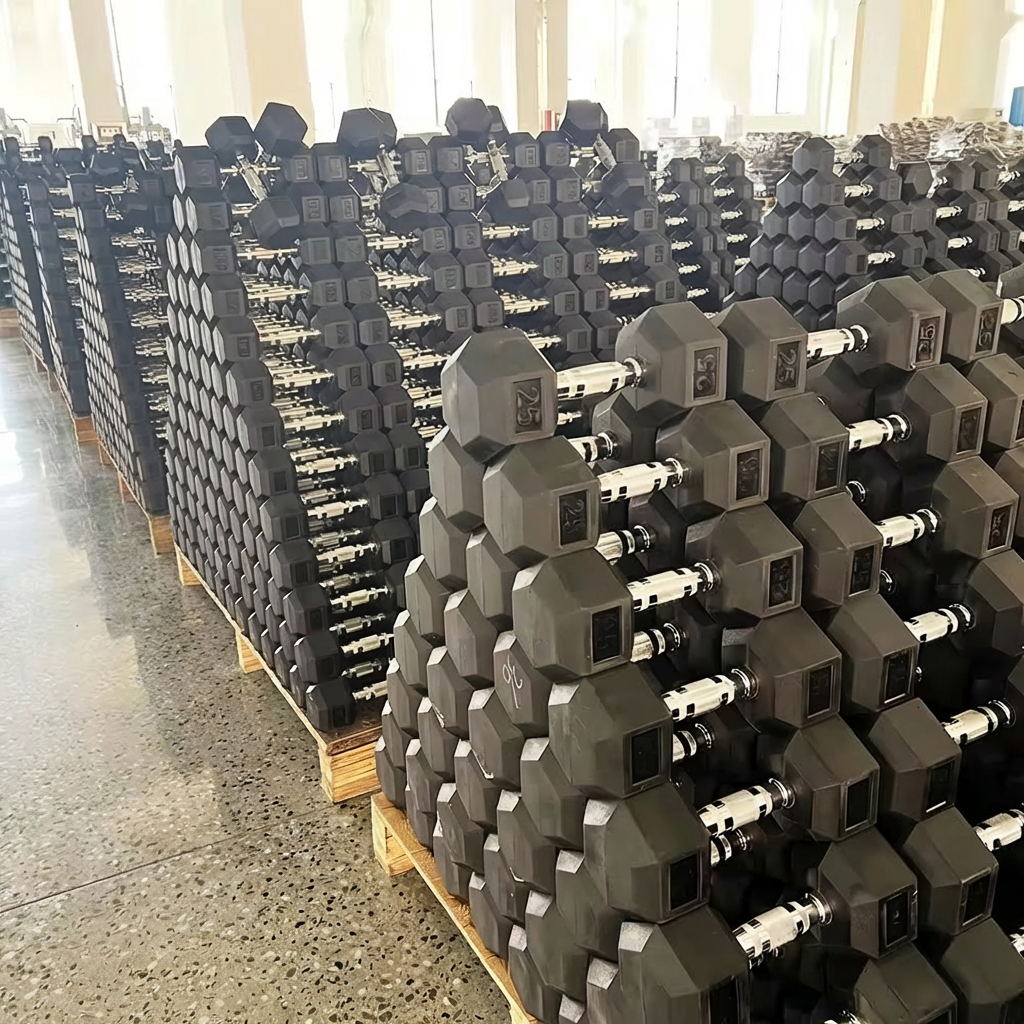
Your floor plan dictates your true operational capacity. Maximizing square footage improves member satisfaction directly. Misplaced equipment creates visual clutter and dangerous trip hazards. Proper spatial planning requires precise geometric calculations.
Horizontal storage racks consume massive amounts of floor space. They provide excellent visual access but limit room capacity. Vertical rack configurations improve footprint efficiency significantly. They work perfectly in tight boutique corners. However, vertical racks often struggle holding items heavier than fifty pounds safely. Calculate your exact square footage required before ordering specific rack styles.
Heavy iron destroys standard concrete subfloors instantly. You must match equipment types to gym flooring thickness. Pair heavy lifting zones with minimum fifteen-millimeter high-density rubber tiles. Acoustic considerations also matter deeply. Dropped weights send shockwaves through building foundations. Urethane materials combined with ultra-thick flooring mitigate structural vibrations. This keeps neighboring tenants happy and prevents concrete cracking.
Traffic flow dictates member safety directly. Place storage racks strategically to optimize navigation. Keep heavy lifting zones away from main walkway arteries. Designate clear boundaries for drop-zone hazards. Members should never carry hundred-pound items across crowded pathways. Create compact localized zones where benches, racks, and mirrors sit intimately together.
Placing heavy racks directly next to cardio machine treadmills.
Using thin commercial carpet instead of impact-rated rubber tiles.
Failing to leave adequate walking clearance between parallel storage racks.
Ignoring the swing radius required for safe spotting techniques.
Logistics dictate final invoices heavily. Heavy fitness equipment strains traditional supply chains. Understanding freight classifications helps you negotiate better terms. You must partner with reliable commercial distributors.
Less-Than-Truckload shipping differs vastly from Full-Truckload methods. Less-Than-Truckload mixes your pallets alongside other regional shipments. This causes slower transit times and higher handling risks. Full-Truckload dedicates an entire trailer to your facility. It reduces transit damage significantly. Freight density classes impact costs. Dense iron ships differently than bulky padded machines. Securing Wholesale Free Weights requires mastering these exact freight variables.
Adding custom gym logos elevates brand prestige instantly. Original Equipment Manufacturer customization processes require precise timeline management. Embedding colored logos into urethane heads involves complex tooling molds. This extends lead times considerably. Expect timelines stretching several extra months. Custom rubber variants exist but often suffer from rapid logo fading. Urethane laser-engraving provides permanent branding solutions. Minimum order thresholds for custom designs usually run much higher than standard blank inventory.
Vetting wholesale distributors prevents catastrophic operational delays. Never judge a supplier solely on promotional imagery. Request tangible proof of past commercial installations. Verify their exact inventory availability. Backordered items delay grand opening schedules. Investigate their replacement part speed. A broken handle requires immediate substitution. If a supplier takes months to ship a single replacement, your members suffer. Choose partners holding verifiable commercial track records.
Upfitting your facility demands strategic foresight. Base your final supplier decision firmly on a core triad. Prioritize manufacturing material quality, demand absolute freight transparency, and verify warranty reliability. Never let a seemingly low base price distract you from evaluating long-term asset survival.
Your next steps involve strict internal auditing. Map your exact floor plan digitally. Finalize your target weight increments based on member demographics. Request fully itemized freight quotes from at least three verified commercial suppliers. Compare their landed transit costs carefully.
Do not navigate complex heavy equipment procurement alone. We encourage operators to request comprehensive layout audits. Contact the sales team today for a custom wholesale consultation or view the comprehensive wholesale catalog to optimize your upcoming facility expansion.
A: Minimum requirements vary drastically by supplier. Some domestic distributors require a baseline total spend threshold to unlock volume discounts. Overseas manufacturers typically mandate specific tonnage minimums or full container load commitments. Always verify exact qualification thresholds before finalizing your facility budget.
A: Freight logistics severely impact final invoices. Due to extreme weight density, shipping can add substantial percentages to your total expenditure. Pallet fees and residential liftgate surcharges inflate bills further. You must always negotiate final landed costs rather than merely focusing on the base unit price.
A: Yes. High-traffic commercial facilities benefit immensely from urethane. Urethane guarantees zero off-gassing odor. It resists peeling, tearing, and sunlight degradation permanently. Cheap rubber degrades rapidly and typically requires a complete replacement cycle every few years. The upfront urethane investment easily pays off structurally.
A: Yes. Custom branding occurs through specific manufacturing processes. Urethane handles embedded logos exceptionally well. However, custom tooling extends typical manufacturing lead times by several extra months. Custom branding also generally demands much higher minimum order commitments compared to purchasing standard blank inventory.


