

Views: 0 Author: Site Editor Publish Time: 2026-06-22 Origin: Site


Selecting the right equipment mix isn't just a matter of member preference. It directly impacts floor space efficiency, overall longevity, and facility liability. Gym operators frequently over-index on versatile options while neglecting heavy-duty stability. Conversely, they might overspend on dedicated stations. These large items can quickly eat up valuable square footage. A poorly chosen Weight Bench can bottleneck traffic or pose serious safety risks. We see many facilities struggle to find the optimal balance. This guide breaks down the structural differences between essential gym staples. You will learn the ideal use cases and commercial evaluation criteria for flat, adjustable, and Olympic options. We aim to help you allocate your equipment budget effectively. By understanding these core differences, you can design a layout matching your members' specific training needs.
Flat Benches offer the highest weight capacity and lowest maintenance, serving as mandatory pairings for power racks and heavy dumbbell zones.
Adjustable Benches (FID) maximize exercise variety per square foot but require rigorous evaluation of hinge mechanisms and pad gaps to ensure commercial durability.
Olympic Benches are essential for dedicated, heavy barbell pressing, offering built-in uprights and spotter platforms that reduce liability.
Commercial viability demands strict baselines: 11-gauge steel frames, high-density rebond foam, and 1,000+ lb weight capacities.
Every piece of equipment commands a specific footprint. This footprint dictates traffic flow throughout your free-weight zones. You must measure exactly how much room each unit demands. A cluttered training area frustrates members. It drastically reduces overall capacity during peak hours. You need ample buffer zones around each station. Members require adequate space to maneuver heavy dumbbells safely.
Placing light-commercial or home-grade gear in high-traffic environments creates massive liability risks. Catastrophic failure under heavy loads leads to severe injuries. A frame snapping during a heavy press introduces unacceptable danger. You must prioritize robust, stable frames capable of surviving continuous abuse. Facility owners carry the responsibility of providing structurally sound lifting platforms.
Moving parts wear down over time. You must balance the high utility of adjustable components against static frames. Pop-pins and adjustment ladders require regular inspection. Fewer moving parts mean lower long-term repair needs. Forecasting these maintenance intervals keeps your operations running smoothly. Static frames practically eliminate mechanical breakdowns. Adjustables demand consistent lubrication and hardware checks.
Flat benches represent the foundation of any serious strength facility. They feature a fixed frame and zero moving parts. Manufacturers typically build them lower to the ground. This specific height optimizes foot drive during heavy presses. Lifters need their feet planted firmly. A lower profile allows shorter athletes to maintain proper form.
These units deliver maximum structural integrity. You receive the highest weight rating per dollar spent. The continuous pad provides uninterrupted scapular support. Lifters experience zero pad gaps across their upper backs. This solid surface promotes better shoulder retraction. Furthermore, the absence of hinges ensures the lowest possible maintenance requirement. Staff members rarely need to service these items.
You should place these heavy-duty workhorses in specific zones. They serve as ideal pairings for power racks. Heavy dumbbell pressing areas require multiple flat units. High-turnover functional training spaces benefit from their indestructible nature. They handle explosive movements and heavy step-ups flawlessly.
Always watch for specific evaluation red flags. Sub-standard pad width poses a significant problem. Pads measuring under 12 inches risk shoulder instability. Lifters need a broad base supporting heavy loads. Additionally, avoid units lacking mobility features. Wheels and handles remain mandatory. Staff and members must move them easily across rubber flooring.
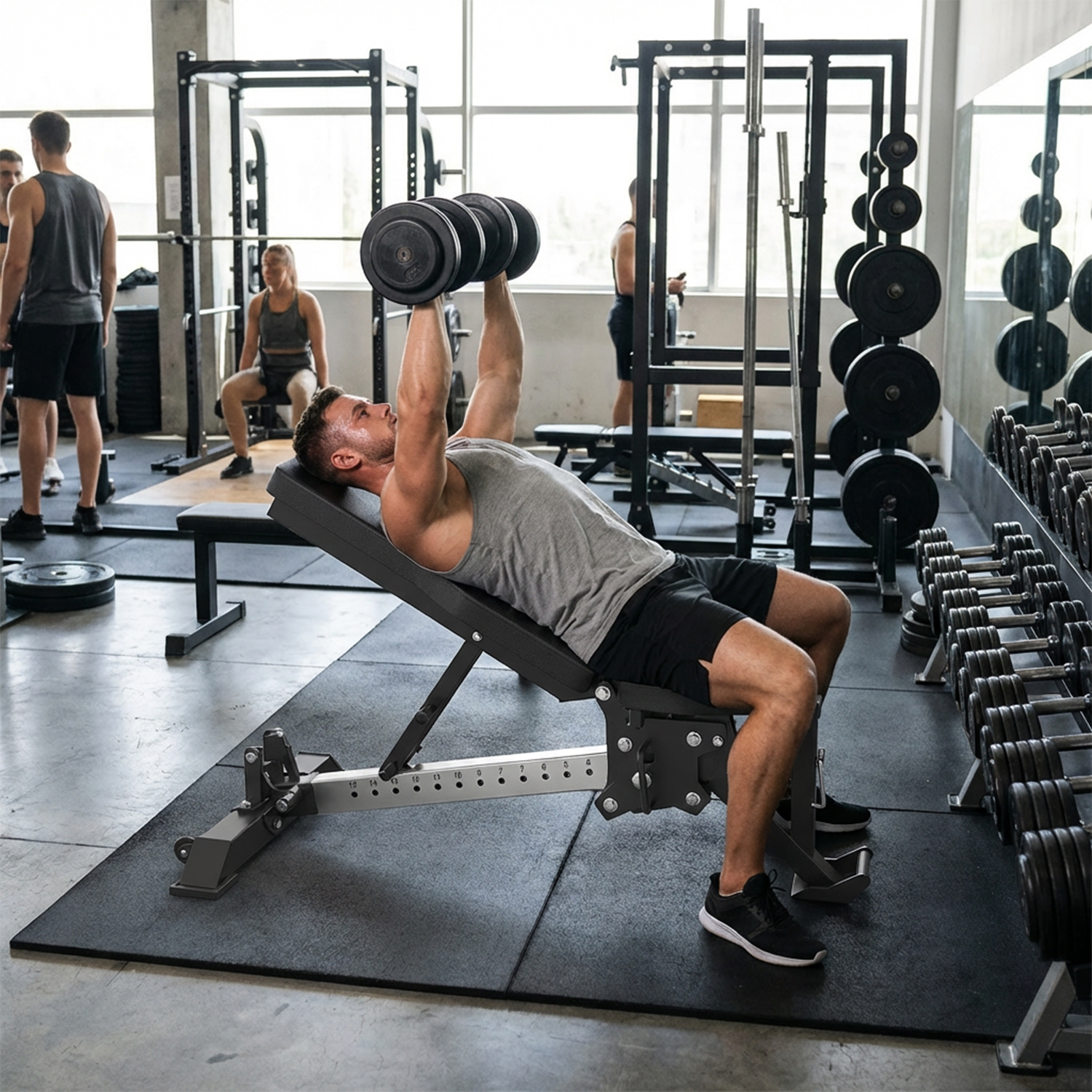
Adjustable benches offer incredible flexibility. They provide flat, incline, and decline (FID) capabilities. Users switch angles utilizing ladder or pop-pin adjustment mechanisms. This adaptability consolidates multiple exercise stations into a single footprint. One unit allows users to target different muscle groups seamlessly.
These models remain essential for isolation movements. Lifters rely heavily on them for upper-chest hypertrophy. Incline dumbbell presses and seated curls require adjustable backrests. They maximize exercise variety per square foot. This efficiency makes them invaluable for smaller training spaces. You can accommodate diverse workout routines without buying redundant equipment.
General free-weight zones need a high volume of these versatile units. Personal training studios benefit immensely from their multi-purpose design. Boutique facilities operating in limited square footage depend on them constantly. Trainers can guide clients through entire upper-body workouts using just one station.
However, you must meticulously evaluate structural weaknesses. An excessive pad gap causes severe lower back discomfort. When laid flat, a wide gap pinches the spine. Flimsy adjustment ladders wear down quickly. They might slip under load, causing sudden drops. Wobbly seat pads compromise user stability. Seated overhead presses become dangerous on a shifting seat. Every Commercial Weight Bench considered for purchase must pass a strict lateral stability test.
Olympic variations serve as dedicated stations for heavy barbell training. They boast a wide, fixed footprint. They feature integrated barbell uprights and built-in J-hooks. Many premium models include dedicated spotter platforms. Manufacturers offer them in flat, incline, and decline setups. These large structures dominate traditional strength floors.
Their primary commercial advantage involves traffic management. They remove the need to occupy a power rack for standard bench pressing. Members can perform heavy sets without monopolizing valuable squat cages. They also enhance user safety significantly. Dedicated lift-off points help lifters unrack smoothly. Built-in spotter proximity reduces liability by positioning assistants optimally over the lifter.
Big-box commercial gyms require a complete circuit of these stations. Powerlifting facilities demand them for competition prep. Athletic training centers rely on them daily for team workouts. These environments see constant heavy barbell usage. Dedicated stations streamline the lifting process.
Be vigilant regarding specific manufacturing red flags. A lack of bolt-down tabs creates tipping hazards during heavy racking. Narrow uprights pinch hand placement. Lifters need wide grip options without smashing their fingers. An absence of protective UHMW plastic ruins equipment quickly. Metal-on-metal contact leads to rapid wear. Bar catches strip the knurling off expensive barbells and develop aggressive rust.
Selecting the right equipment requires strict adherence to industrial standards. You cannot judge a bench solely by its appearance. The underlying materials dictate its lifespan. Follow these core evaluation steps when reviewing potential additions to your gym floor.
Verify Steel Specifications: Confirm the manufacturer uses 11-gauge steel or better.
Inspect Upholstery Quality: Check for double-stitched seams and grippy vinyl textures.
Test Foam Density: Press firmly into the pad ensuring it resists bottoming out.
Review Weight Ratings: Demand static load testing documentation exceeding 1,000 lbs.
Examine Hardware: Look for heavy-duty industrial bolts and smooth powder coating.
Steel thickness remains the non-negotiable standard. 11-gauge tubular steel prevents frame torsion. Thinner metals warp under repetitive heavy loads. You need structural rigidity preventing lateral sway. The frame must withstand hundreds of daily impacts from dropped weights.
Upholstery and foam quality directly impact user experience. Grippy, tear-resistant vinyl keeps lifters locked in position. Slippery materials cause form breakdown during max efforts. High-density closed-cell foam proves necessary. Soft foam allows the shoulder blades to hit the underlying wood backer. This "bottoming out" causes pain and ruins lifting mechanics.
Weight capacity ratings often confuse buyers. You must differentiate between "static load" and "dynamic load" limits. Static limits measure the absolute maximum stationary weight. Dynamic limits account for the force generated during movement. Target a minimum 1,000 lbs static rating. This accommodates a 300 lb user dropping a 150 lb dumbbell aggressively.
Hardware and finish complete the commercial profile. Powder coating provides crucial sweat resistance. Liquid chalk and perspiration destroy inferior paint jobs quickly. Industrial-grade bolts lock the frame together permanently. Cheap bolts loosen over time, creating a dangerous wobble.
| Evaluation Component | Commercial Standard | Residential/Light Warning Sign |
|---|---|---|
| Frame Steel | 11-Gauge (or thicker) | 14-Gauge (too thin, bends easily) |
| Foam Core | High-Density Rebond Foam | Open-cell / Soft memory foam |
| Weight Rating | 1,000+ lbs Static Load | 500 lbs or unspecified |
| Pad Width | 12 inches to 14 inches | Under 11 inches |
Your gym's demographic dictates the optimal equipment ratio. A big-box commercial space requires a different setup than a specialized strength club. Balancing this ratio prevents traffic jams during peak hours. It also ensures you do not waste money on redundant items.
The big-box commercial ratio demands heavy volume. You must balance a large fleet of adjustable units against dedicated Olympic stations. General fitness enthusiasts gravitate toward adjustables. Serious lifters occupy the Olympic setups. Maintaining a 3-to-1 ratio of adjustables to dedicated stations often manages peak-hour traffic effectively.
Powerlifting and strength clubs require a specialized mix. Prioritize heavy-duty flat options. Bring in specialized competition-spec Olympic units meeting federation standards. Feature grippy fat-pads measuring 14 inches wide. Strength athletes demand these specific dimensions for optimal shoulder health.
Boutique or personal training studio setups operate differently. They rely heavily on premium, easily maneuverable adjustables. Space remains tight. You must maximize every square inch. A high-quality adjustable unit serves almost every client need. Dedicated Olympic stations usually waste too much room in these intimate environments.
| Facility Type | Primary Focus | Recommended Bench Mix |
|---|---|---|
| Big-Box Gym | General fitness & volume | 60% Adjustable, 30% Olympic, 10% Flat |
| Powerlifting Club | Heavy barbell strength | 50% Olympic (Comp Spec), 40% Flat, 10% Adjustable |
| Boutique Studio | Space efficiency & PT | 90% Premium Adjustable, 10% Flat |
Your next steps involve auditing your current free-weight floor plan. Measure your available square footage accurately. Tape out the required footprints on your rubber flooring. Observe traffic flow during your busiest hours. Once you understand your spatial limits, request custom quotes for a customized Commercial Weight Bench package matching your exact layout.
No single bench type solves every operational need. A resilient gym floor requires a calculated, intentional mix. You must balance the unwavering stability of flat units against the ultimate versatility of adjustables. Dedicated Olympic stations remain irreplaceable for serious barbell enthusiasts. Supplying the right combination minimizes bottlenecks and enhances member satisfaction.
Always prioritize 11-gauge steel construction. Never compromise on structural integrity. Assess the pad gap on all adjustable models rigorously. Match your equipment ratio directly to your core demographic. Avoid purchasing light-duty gear hoping it survives heavy commercial use. Doing so only invites excessive repair tasks and liability issues.
Promptly review current equipment catalogs to identify upgrade opportunities. Consult layout specialists to optimize your floor plan. Evaluate your older pieces for signs of wear. Do not wait for a frame to crack before taking action. Request a custom quote today to secure durable, high-performing strength equipment for your members.
A: Look for a minimum static load rating of 1,000 lbs. This high threshold safely accounts for exceptionally heavy users combining their body weight with heavy dumbbells or barbells. Dynamic forces created during explosive lifting require this elevated baseline to prevent frame warping.
A: Ladders offer faster transitions between angles, making them popular for fast-paced workouts. Pop-pins utilize an enclosed mechanism offering tamper-resistant durability. High-traffic environments often prefer pop-pins for longevity, while personal training studios favor ladders for speed.
A: Olympic stations typically require bolting down to ensure liability protection and rack stability during heavy re-racking. Flat and adjustable units are designed for mobility. They feature wheels and handles allowing users to move them freely around dumbbell racks and cages.
A: The standard commercial width is 12 inches, providing adequate support without restricting shoulder blade movement. However, heavy lifters and powerlifters often prefer 14-inch "fat pads" to increase stability and protect shoulder joints during maximum-effort presses.


