

Views: 0 Author: Site Editor Publish Time: 2026-06-12 Origin: Site


Equipping a facility with substandard gear carries hidden operational costs. You face increased liability risks and frequent upholstery replacements. These silent budget drains hurt your bottom line every single month. Buying a single unit for a garage gym differs drastically from procuring equipment at scale. High-traffic environments demand rigorous engineering standards. A standard Weight Bench built for home use will quickly fail under continuous commercial stress. We aim to provide facility managers and gym owners with an evidence-based framework. You will learn how to evaluate, compare, and shortlist suppliers effectively. We focus strictly on long-term durability, lifecycle management, and user safety. By the end of this guide, you will know exactly what separates true commercial equipment from heavy-duty consumer alternatives. You can then make highly informed purchasing decisions for your fitness facility.
11-gauge steel is the commercial baseline: Anything thinner (higher gauge) risks structural integrity under continuous, heavy dynamic loading.
Upholstery dictates maintenance costs: High-density rebond foam with heavy-duty vinyl prevents early tearing and hygiene issues.
Ladder-style adjustments outperform pop-pins: In commercial settings, ladder mechanisms reduce mechanical failure points and improve user experience.
Warranty fine print matters: True commercial equipment separates frame warranties (often lifetime) from upholstery/moving parts (typically 6-12 months).
Many consumer brands slap the word "commercial" on heavy-duty home gear. They do this to justify premium positioning in a crowded market. Gym owners need objective compliance and strict engineering standards. Relying purely on marketing labels often leads to critical equipment failure. You must evaluate the structural facts to avoid severe liability issues down the road. Home users treat their personal equipment carefully. Conversely, gym members often drop heavy weights aggressively. This constant abuse accelerates metal fatigue rapidly.
Static load ratings can easily deceive unsuspecting buyers. A manufacturer might claim a 1,000-pound static load rating. They achieve this by simply placing a stationary weight on the pad. This specific metric becomes completely irrelevant during actual daily use. A lifter dropping a 400-pound barbell creates massive kinetic energy. The steel frame must absorb this sudden force without bending. True commercial benches undergo rigorous dynamic stress testing. They survive repetitive, violent impacts rather than just static resting pressure.
The industry standard for facility longevity relies firmly on the 11-gauge rule. High-quality benches use 3x3-inch, 11-gauge steel tubing. Lower gauge numbers mean thicker steel walls. Anything thinner, like 14-gauge steel, flexes noticeably under heavy loads. Over time, this subtle flexing causes micro-fractures. It eventually leads to continuous weld fractures and catastrophic frame failure. 11-gauge steel provides the perfect structural balance. It delivers immense strength while remaining reasonably movable across the gym floor.
Liability and safety compliance remain your absolute top priorities. Equipment failure in a commercial environment invites disastrous consequences. A collapsed frame during a heavy lift can cause severe injury. You face massive legal exposure and reputational damage. You must purchase exclusively from vendors possessing verified manufacturing tolerances. They should provide clear documentation of their rigorous testing protocols. Strict compliance ensures your members stay safe during every single workout.
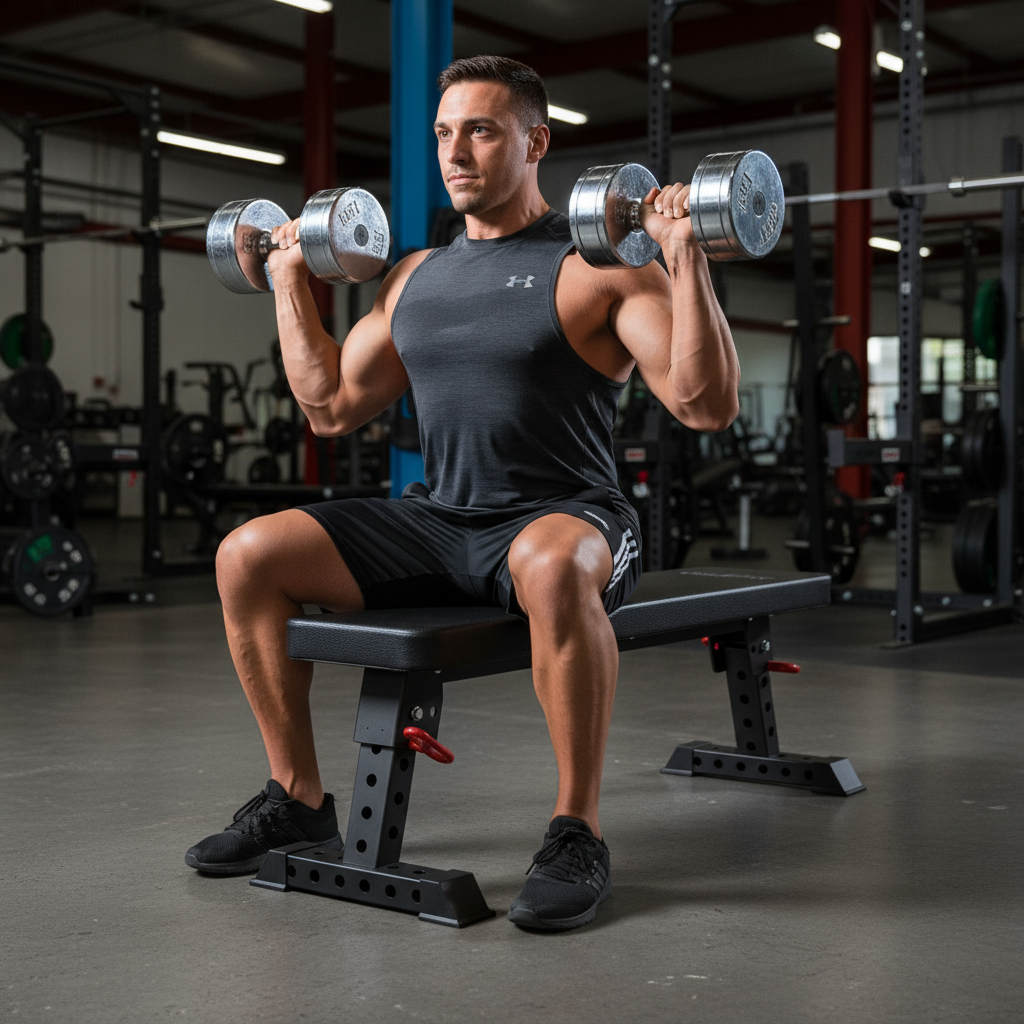
Mapping bench types to specific gym demographics optimizes your entire floor plan. Powerlifting centers need specialized, ultra-stable equipment designed for massive loads. Bodybuilding facilities require versatile adjustable options to hit various muscle angles. General fitness zones demand approachable, space-saving designs for circuit training. A well-planned Commercial Weight Bench layout prevents member bottlenecks during peak operational hours. You must maintain adequate safety corridors between each lifting station.
Flat benches serve as the absolute workhorse of any free-weight area. Members use them constantly for dumbbell rows, chest presses, and core work. A proper flat bench must feature a tripod base design. The single front post prevents annoying foot interference during heavy pressing. Lifters can tuck their feet back securely to generate maximum power. This leg drive remains crucial for stable, heavy lifts. A standard four-post design often blocks optimal foot placement entirely.
Adjustable benches provide space-saving versatility specifically for crowded dumbbell zones. Industry professionals often call them FID benches. FID stands for Flat, Incline, and Decline. These units handle multiple exercise angles seamlessly in one single footprint.
Pad gap measurement: The physical gap between the seat and backrest must be minimal in the flat position. Large gaps cause severe lower back pain during heavy presses.
Stability at the highest incline: The bench should never wobble when positioned vertically for heavy seated shoulder presses.
Ease of mobility: Integrated polyurethane wheels and heavy-duty front handles allow members to move them quickly.
Olympic bench stations act as large, fixed hubs for heavy barbell training. They visually dominate the primary strength floor. You must evaluate the liftoff points very carefully before purchasing. Gun-rack designs offer multiple fixed heights for different arm lengths. Modern J-cup mechanisms allow precision custom height adjustments. Integrated spotter platforms give trainers a secure standing area. Bolt-down tabs offer ultimate facility security. You anchor the unit directly into the concrete floor. This permanently prevents any shifting during aggressive reracking.
Evaluating specific construction features ensures a massive long-term return on your investment. The initial build quality dictates the entire operational lifespan of the equipment. A cheap upfront purchase always results in massive ongoing maintenance bills.
Frame and weld quality reveal a manufacturer's true engineering standards. You should look exclusively for robotic laser-cut continuous welds. Some cheap manufacturers still rely heavily on manual spot welds. Spot welds can easily pop under continuous heavy dynamic stress. Continuous robotic welds fuse the steel joints entirely. They create a unified, unbreakable structure. Bolted components require high-end industrial-grade hardware. Zinc-plated or stainless steel bolts completely prevent rust from acidic sweat exposure.
Adjustment mechanisms face relentless, brutal daily abuse. Hundreds of members will adjust the seat angle multiple times weekly. The ladder system stands out as the preferred choice for high-traffic facilities. Ladder mechanisms feature zero internal moving parts. The user simply lifts the pad and drops the support arm into a steel notch. It provides immediate visual locking confirmation. Users know exactly when the bench is secure.
Pop-pin or telescoping designs carry significantly higher wear-and-tear risks. Members often carelessly cross-thread the adjustment pins. The internal pins bend or snap off completely over time. Stripped threads render the entire bench completely useless. We strongly advise against pop-pin mechanisms for heavy commercial facility use.
Pad quality and ergonomics directly affect lifter comfort and performance. You must evaluate the internal foam density and external wrapping material. High-density rebond foam prevents the pad from bottoming out under heavy loads. If a lifter's shoulder blades hit the internal wooden backboard, the pad has failed. Gripper-style textured vinyl prevents lifter slippage. A sweaty lifter sliding off a slick pad risks serious spinal injury.
Standard back pad widths generally range from 10 to 12 inches. Specialized wide pads, often called fat pads, measure up to 14 inches across. Dedicated powerlifting facilities strongly prefer wide pads. They provide massive shoulder blade support during maximum effort bench presses.
Base stability and floor protection complete the physical evaluation process. High-quality rubberized feet prevent expensive floor gouging. They also stop the steel frame from sliding laterally. A bench should never shift during unilateral movements. Bulgarian split squats put massive lateral shear force on the frame. Bolt-down gussets offer the ultimate structural stability solution.
| Component | Commercial Standard | Consumer Alternative (Avoid) |
|---|---|---|
| Steel Frame | 11-Gauge (3x3 inch) | 14-Gauge or thinner |
| Adjustment Style | Laser-cut Ladder System | Spring-loaded Pop-Pins |
| Upholstery Foam | High-Density Rebond Foam | Soft Open-Cell Foam |
| Weld Quality | Continuous Robotic Welds | Manual Spot Welds |
| Footprint Stability | Tripod Base with Rubber Feet | Four-Post Slick Metal Base |
Implementation realities quickly prove the initial equipment invoice is only the beginning. You must carefully evaluate the long-term carrying cost of your entire setup. Facility managers must proactively plan for ongoing wear and tear. Budgeting for operational maintenance prevents sudden equipment downtime.
Replacement part availability separates excellent vendors from terrible ones. Members will eventually tear the vinyl covering. They will accidentally drop heavy dumbbells on the transport wheels. Can you buy a replacement back-pad directly from the original manufacturer? Many low-tier brands force you to purchase a completely new bench. A reliable commercial supplier stocks replacement parts for several years. This saves your facility thousands of dollars over a decade of operation.
Warranty breakdowns require extremely careful reading. You must understand exactly how to analyze commercial warranties. Expect a generous lifetime guarantee on structural steel frames. However, you must heavily scrutinize the exact coverage for wear items. Grips, wheels, and upholstery usually carry much shorter 6 to 12-month warranties. Reviewing these specific timelines helps you forecast your annual maintenance budget accurately.
Shipping and assembly efficiency directly impact your grand opening timeline. Freight costs for bulk commercial orders vary wildly between suppliers. Assess whether the benches ship fully assembled or flat-packed. Fully assembled units cost significantly more in freight but save massive labor hours on site. Flat-packed equipment requires hiring specialized installation teams. You must weigh the higher freight costs against local assembly labor rates. Sometimes, paying for premium, fully assembled delivery makes the most operational sense. For comprehensive logistical guidance on bulk outfitting, consider reviewing specialized Commercial Weight Bench delivery services.
Gym owners frequently make easily avoidable mistakes during the vendor shortlisting phase. Maintaining a highly skeptical lens protects your investment capital. Evaluating biomechanical design flaws prevents member dissatisfaction. Avoid these specific procurement pitfalls when finalizing your massive equipment order.
Ignoring the "Pad Gap": Buying adjustable benches with poor hinge designs creates major usability issues. A mechanical hinge that creates a 3-plus inch gap causes severe lower back discomfort. Lifters physically sink into the gap during heavy flat presses. Always demand precise gap measurements before confirming your order.
Overlooking Bench Height: Purchasing benches sitting significantly higher than 17.5 inches causes immediate member complaints. The International Powerlifting Federation (IPF) standard mandates roughly 17 to 17.5 inches from the floor. Taller benches prevent shorter members from achieving proper foot drive. They simply cannot plant their feet flatly on the rubber floor.
Accepting Narrow Tripod Bases: Some tripod designs look incredibly sleek but lack functional stability. A single front post that is too narrow allows the bench to tip laterally. You must test the lateral stability aggressively before making a bulk purchase.
Proprietary Attachments: Investing in ecosystem-locked benches traps your facility long-term. Proprietary leg rollers or customized spotter arms limit your future options. Independent third-party maintenance crews often cannot service them effectively. Stick to universally sized attachments and standardized pin holes whenever possible.
Sourcing the right equipment requires carefully balancing upfront capital with long-term durability. Member safety remains the absolute highest operational priority. You must actively reject flimsy steel frames and fragile pop-pin mechanisms. Focus strictly on 11-gauge construction, continuous robotic welds, and high-density rebond upholstery. These structural elements ensure your equipment easily survives years of brutal daily use.
Start by auditing your current floor plan for exact bench-to-member ratios. Draft a standardized request for proposal based on specific steel gauge and upholstery requirements. Exclude any unverified vendor failing to meet rigorous dynamic load requirements. Finally, request comprehensive bulk freight quotes from highly verified commercial manufacturers. Actionable planning today easily prevents costly maintenance emergencies tomorrow.
A: A true commercial weight bench should feature a baseline capacity of 1,000+ pounds. However, this number must represent dynamic testing rather than static limits. Static limits only measure resting weight. Dynamic capacity ensures the frame can withstand the massive kinetic force of a heavy barbell suddenly dropping onto the pad.
A: 11-gauge steel stands as the optimal choice for commercial gyms. It provides the perfect balance of incredible strength, overall weight, and manufacturing cost. Thinner materials flex under heavy use, while thicker gauges make the benches too heavy for members to move easily around the free-weight zone.
A: Ladder systems are significantly better for high-traffic environments. They rely on heavy steel notches and gravity, featuring zero internal moving parts. This drastically reduces mechanical failure. Pop-pins frequently suffer from stripped threads and bent pins when adjusted forcefully by hundreds of members every single week.
A: You should typically replace commercial bench pads every 18 to 36 months. This timeline depends heavily on facility volume and daily usage rates. Premium gripper-style vinyl and high-density rebond foam extend this lifespan considerably. Regular cleaning with non-corrosive solutions also prevents the vinyl from cracking prematurely.


